Treatment
Vertebroplasty
Cement injection stabilises painful vertebral fractures and supports your spine.
What patients can expect
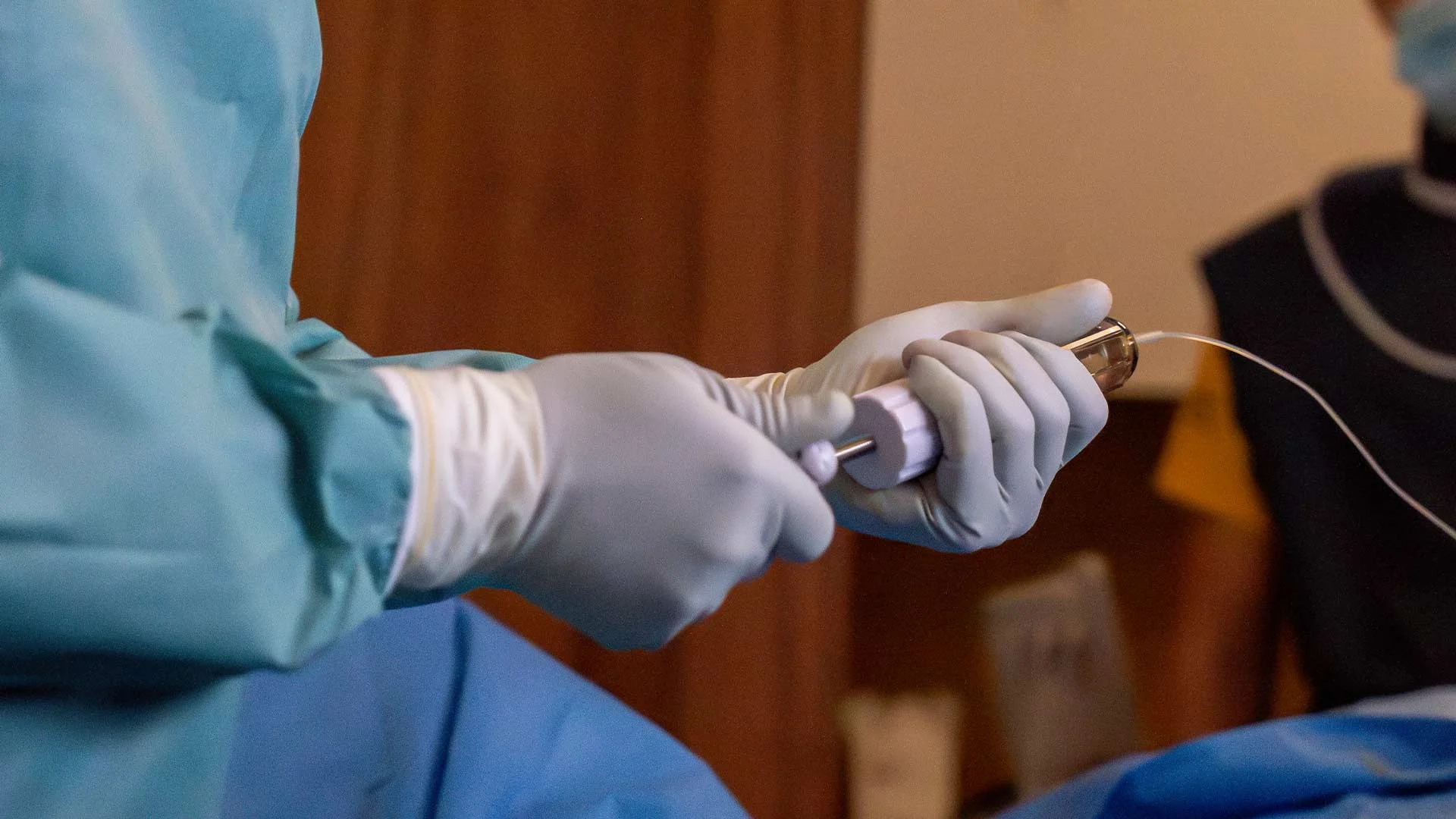
Vertebroplasty is an image‑guided procedure where medical cement is injected into a fractured vertebra to improve stability. It is most often considered for painful compression fractures when pain persists despite appropriate conservative care.
Before the procedure you will have a clinical assessment and imaging review (often MRI) to confirm the fracture is the likely pain source and to check suitability. The team explains the plan, expected benefits, and alternatives so you can make an informed decision.
After the procedure, recovery typically focuses on safe mobility, gradual return to activity, and bone health measures such as osteoporosis assessment and prevention strategies when relevant.
Vertebroplasty: technique, benefits, steps, risks, and recovery
Vertebroplasty aims to stabilise a symptomatic vertebral fracture. Suitability depends on imaging findings, fracture type, symptoms, and overall health.
Technique (how it works)
Under imaging guidance, a needle is placed into the fractured vertebra and cement is injected to improve structural stability. The goal is to reduce painful micromotion at the fracture site.
Medical benefits
- May reduce pain from selected vertebral compression fractures.
- Can support earlier mobility and functional improvement in suitable cases.
- Performed as an image‑guided, minimally invasive outpatient procedure in many settings.
- Often combined with a wider plan for bone health and rehabilitation.
Procedural steps
- Assessment and imaging review to confirm fracture level and suitability.
- Anaesthesia plan and positioning for safe access.
- Needle placement under imaging guidance.
- Cement injection with real‑time monitoring.
- Observation, mobilisation, discharge instructions, and follow‑up.
Risks and complications
- Bleeding, infection, and reactions to medications or anaesthesia.
- Cement leakage (usually minor, rarely clinically significant).
- Nerve irritation or injury (uncommon).
- Persistent pain if the fracture is not the primary pain source.
Preparation and aftercare
- Bring imaging and a medication list; discuss blood thinners well in advance.
- Follow fasting and pre‑procedure instructions and arrange transport home.
- Follow wound care guidance and monitor for fever, new weakness, or severe pain.
- Review bone health and prevention strategies if osteoporosis is a concern.
Recovery timeline
Many people mobilise shortly after the procedure. Functional improvement is typically gradual and supported by appropriate activity progression and bone health management.
Minimally
Invasive Treatments
State-of-the-art techniques requiring only small incisions, reducing recovery time and discomfort.
Vertebroplasty
Vertebroplasty treats spinal fractures by injecting bone cement to stabilize the vertebra. This minimally invasive procedure reduces pain and improves mobility, especially for compression fractures in osteoporosis patients.
Learn moreRadiofrequency
Radiofrequency ablation is a minimally invasive procedure guided by ultrasound or fluoroscopy that uses an electric current to heat and disable nerve tissue, preventing it from sending pain signals.
Learn moreInterspinous Spacers
Interspinous spacers are small implants that relieve spinal nerve pressure, effectively treating lower back pain and stenosis. This minimally invasive procedure offers faster recovery and is typically done in under an hour.
Learn morePeripheral Nerve Block
This minimally invasive procedure, guided by ultrasound or fluoroscopy, injects a local anesthetic to block nerve signals. Adding corticosteroids extends its effect, useful for acute or subacute musculoskeletal conditions.
Learn moreIntra-articular Corticosteroids Injection
Corticosteroids, injected with ultrasound guidance, reduce pain and inflammation in inflammatory arthritis and musculoskeletal conditions. This precise, minimally invasive procedure avoids systemic effects.
Learn moreCalcification Barbotage
Calcific tendinitis, caused by calcium deposits in tendons, is treated with ultrasound-guided barbotage. This procedure removes the deposits and is followed by a corticosteroid injection to reduce inflammation.
Learn moreCryoablation
Cryoablation uses cold temperatures and is a minimally invasive procedure guided by ultrasound or fluoroscopy. The indications vary and include treatment of chronic low back pain, others spine pain and osteoarthritic joints with severe pain and non-controlled by medication.
Learn moreNucleoplasty
Nucleoplasty is a fluoroscopy-guided procedure that treats disc herniation by relieving pressure on the disc and nerves. It takes less than an hour and is performed on an outpatient basis.
Learn morePlatelets Rich Plasma Injection
PRP therapy extracts a platelet-rich portion of a patient's blood and injects it into damaged tissues to promote healing. Typically, three injections are given 1-2 weeks apart for conditions like osteoarthritis, tennis elbow, and muscle tears.
Learn moreHydrodistention
Hydrodistention is mainly used for shoulder conditions, but it can also help with joint pain. By injecting fluid into the joint, it can reduce pain and improve mobility, offering relief in cases of joint stiffness or inflammation.
Learn moreBotulin Toxin Injection
Botulinum toxin blocks acetylcholine release, relaxing overactive muscles when injected, ideally under ultrasound. It treats spasticity, contractures, overuse tendinosis, and can benefit knee osteoarthritis and migraines.
Learn more